Marenga Fibre vs Broom Corn: Why Marenga Makes Such Beautiful, Durable Brooms
If you’ve ever admired a handmade broom and wondered what gives it that earthy beauty and long-lasting strength, the answer is often in the fibres. Two of the most common natural materials used in traditional broom-making are marenga fibre and broom corn — and while they may look similar at first glance, they each bring their own qualities, textures, and stories to the craft.
In my own broom-making practice here in West Cork, I love working with both. Each fibre behaves differently in the hand, and that affects not only how the broom looks, but also how it sweeps, wears, and feels to use. So let’s take a closer look.
What Is Marenga Fibre?
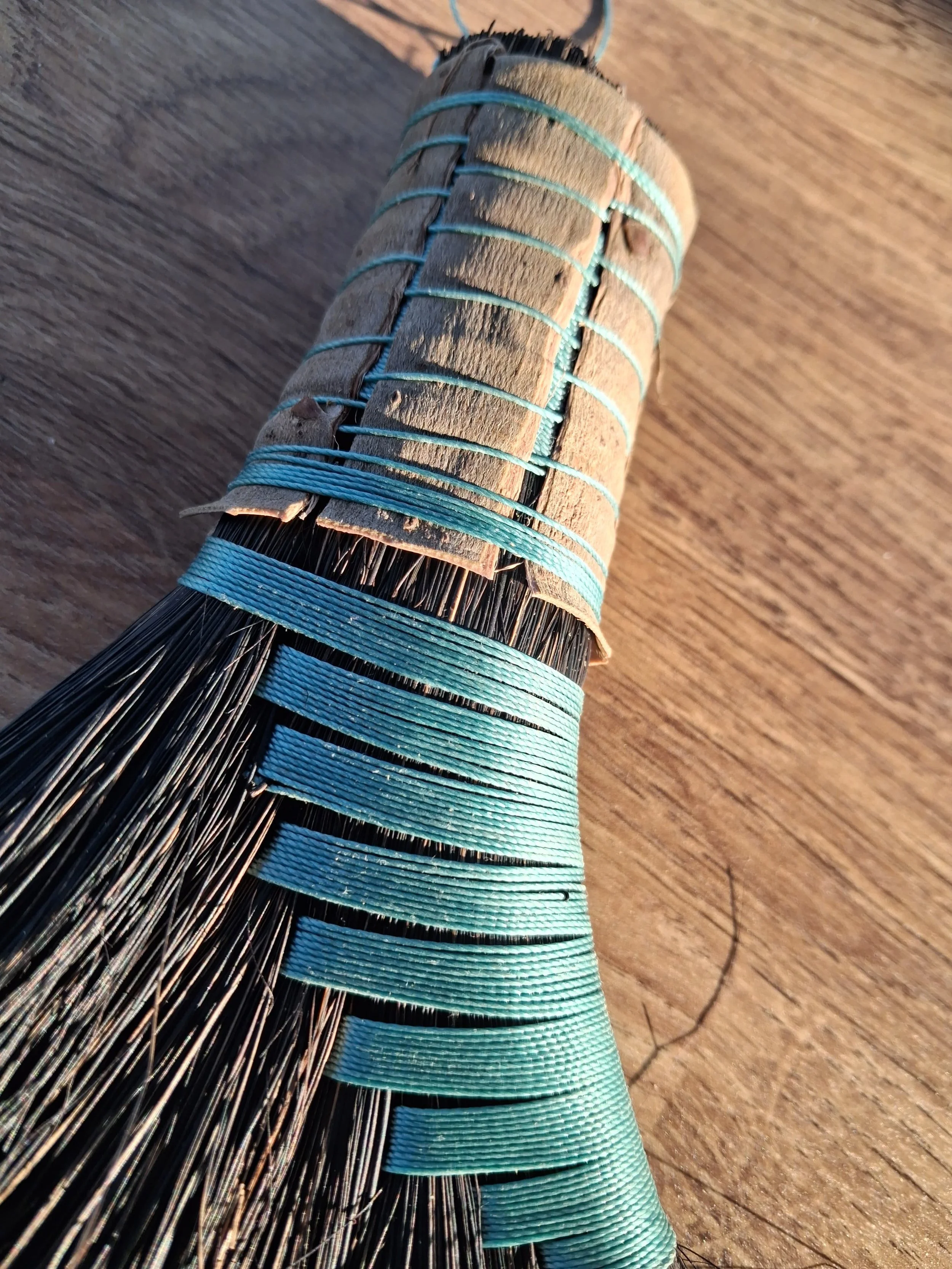
Marenga fibre (often called maringa or maringa palm fibre) is a natural plant fibre traditionally harvested from palm species. The fibres are:
✔ Strong
✔ Light
✔ Flexible yet resilient
✔ Resistant to moisture and wear
More on Marenga:
Marenga has a distinct, slightly textured surface that makes it excellent for gathering dust and debris. It has a beautiful natural colour — that gives brooms a simple, earthy character. Because the fibres are quite tough, marenga brooms are well-suited to:
🧹 Daily household sweeping
🧹 Hearth and workshop areas
🧹 Light outdoor use
🧹 Decorative use that still functions beautifully
Unlike synthetic bristles, marenga fibre is fully biodegradable, making it a much more sustainable choice.
What Is Broom Corn?
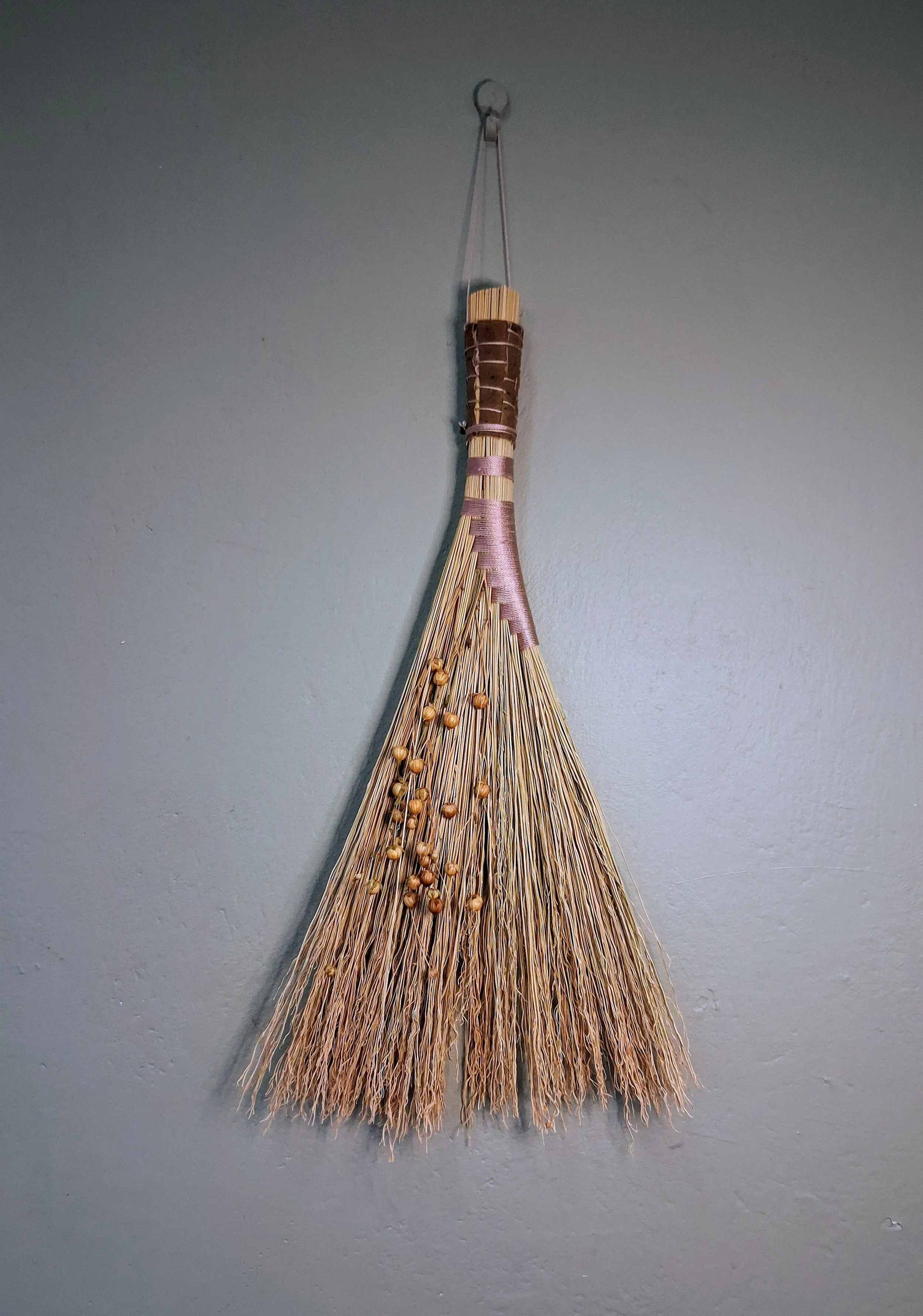
Despite its name, broom corn isn’t actually corn at all — it’s a type of sorghum, a tall grass grown for its strong seed heads. For centuries, broom-makers have bundled and stitched these seed heads into traditional flat-style brooms.
Broom corn fibres are:
✔ Long and straight
✔ Strong but slightly softer than marenga
✔ Very flexible
✔ Ideal for smooth sweeping
Broom corn is especially well known for its role in classic American and European household brooms, the kind many of us grew up with. It’s a beautiful, traditional material with a long history.
Marenga Fibre vs Broom Corn — What’s the Difference?
Here’s how they compare in real-life use:
⭐ Texture & Sweep Quality
Marenga fibre has a slightly coarser texture, which means it grips and gathers dust well — great for hearths, entryways, and textured floors.
Broom corn is softer and glides smoothly, making it perfect for polished floors and indoor sweeping.
⭐ Durability
Marenga is incredibly hardy and resistant to wear, moisture, and pressure.
Broom corn is also durable, but the softer fibres may show wear slightly sooner with heavy use.
⭐ Aesthetic
Marenga brooms often look rustic, organic, and earthy — beautiful hanging as well as sweeping.
Broom corn brooms have that nostalgic, classic broom look we all recognise.
⭐ Sustainability
Both materials are renewable and biodegradable — a win for the planet 🌍
Why I Love Working With Marenga Fibre
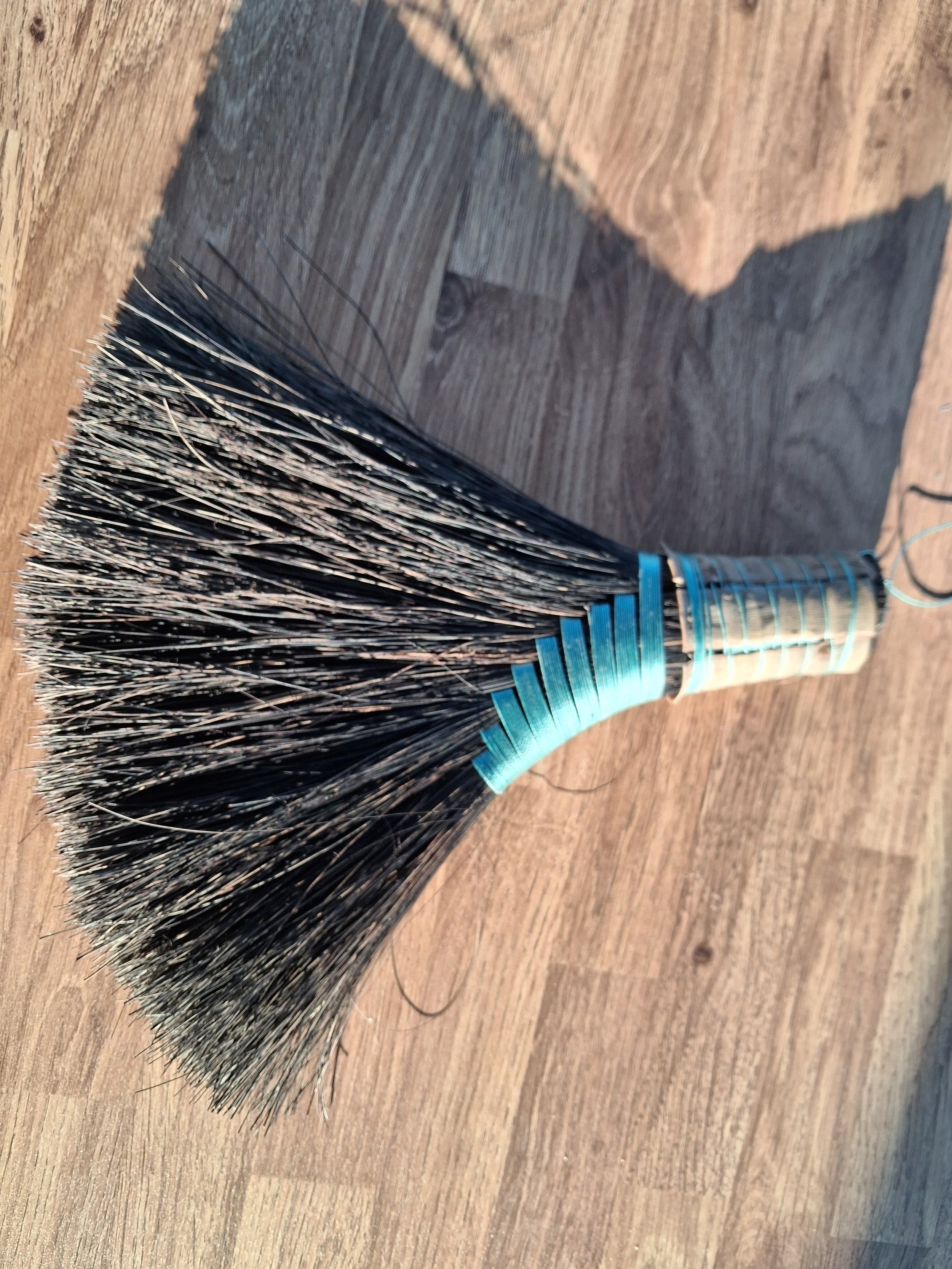
When I create my hand-bound brooms here in West Cork, marenga fibre gives me a chance to make something functional, tactile, and visually beautiful. It holds its form beautifully in turkey-wing style brooms, making them:
✨ Strong
✨ Reliable
✨ A pleasure to use
✨ Equally lovely hung beside the hearth when resting
And of course… they make wonderful gifts — especially for a new home, the New Year, or anyone who appreciates craft, tradition, and natural materials.
Which One Should You Choose?
It really comes down to personal preference and purpose:
Choose Marenga Fibre if you want:
🧹 A slightly firmer, more textured sweep
🌿 A rustic, natural aesthetic
🏡 Something practical and beautiful to display
Choose Broom Corn if you prefer:
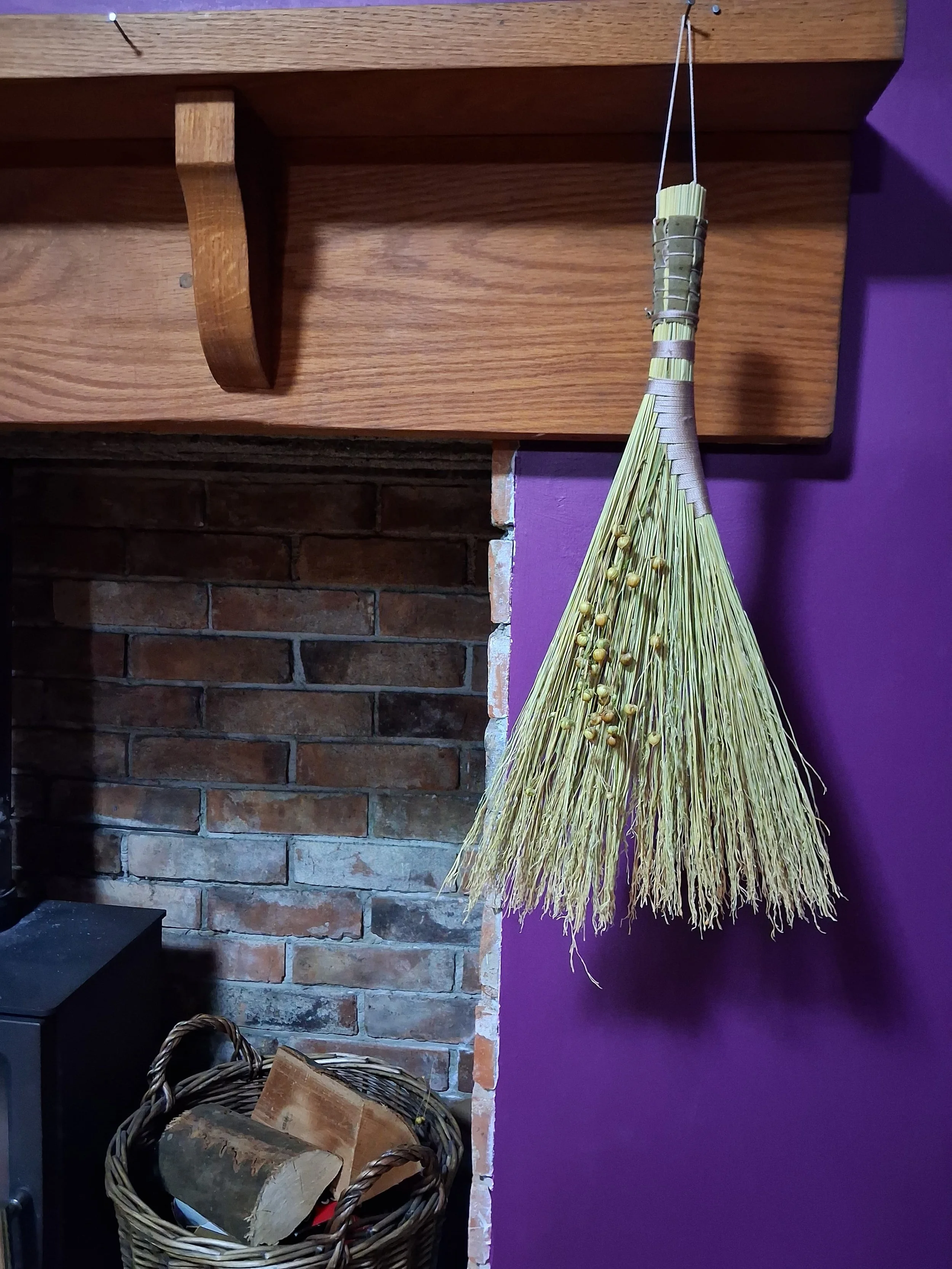
🧹 A soft, smooth sweeping action
🪟 A traditional household broom style
✨ A lighter, flexible feel in the hand
Either way, you’re choosing a material with history, integrity, and sustainability — and that’s something worth celebrating.
If you’d like to see my marenga fibre turkey-wing brooms or learn more about the process, you’re always welcome to browse my shop or join one of my broom-making workshops here in West Cork. There’s nothing quite like learning a traditional craft with your own two hands 💛